UnAcopio.co
Where to donate after the 10 August earthquake, and what each collection point needs.
- Year
- 2026
- Status
- Live
- Role
- Design and engineering
- Stack
- Next.js · TypeScript · Supabase · Leaflet
Context
On 10 August an earthquake hit several municipalities in Colombia. Within hours dozens of collection points appeared: foundations, universities, the Red Cross, companies opening up their warehouses. The information existed, but it was spread across Instagram stories, WhatsApp chains, and lists that contradicted each other.
The problem was not a shortage of generosity, it was logistics. People left home with whatever they had and arrived at a point that was already full, had closed, or needed something else entirely. Every wasted trip was aid that did not arrive.
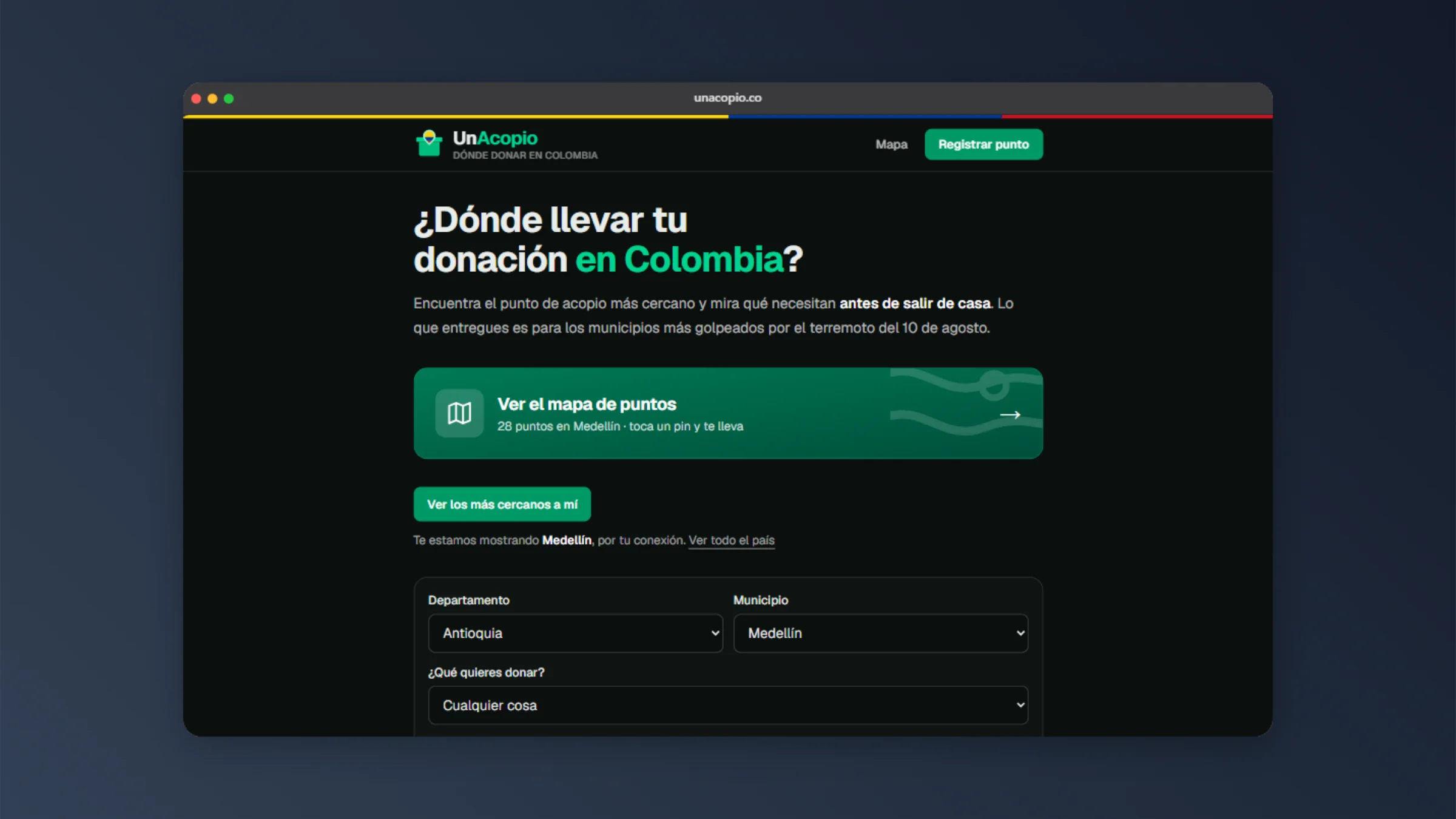
UnAcopio was built to answer one question properly: where do I take this, and do they actually need it?
Decisions
A directory, not a collection platform
UnAcopio receives no money and no donations. It only publishes information, and says so plainly on the site.
Taking donations would have required accounts, traceability and a legal entity — weeks of work at a moment when urgency was measured in days. Publishing information could start immediately, and it sidesteps the question that sinks most emergency efforts: who do I trust with my money? There is nothing to trust here; the donation goes straight to the organisation receiving it.
Nothing is published without a phone call
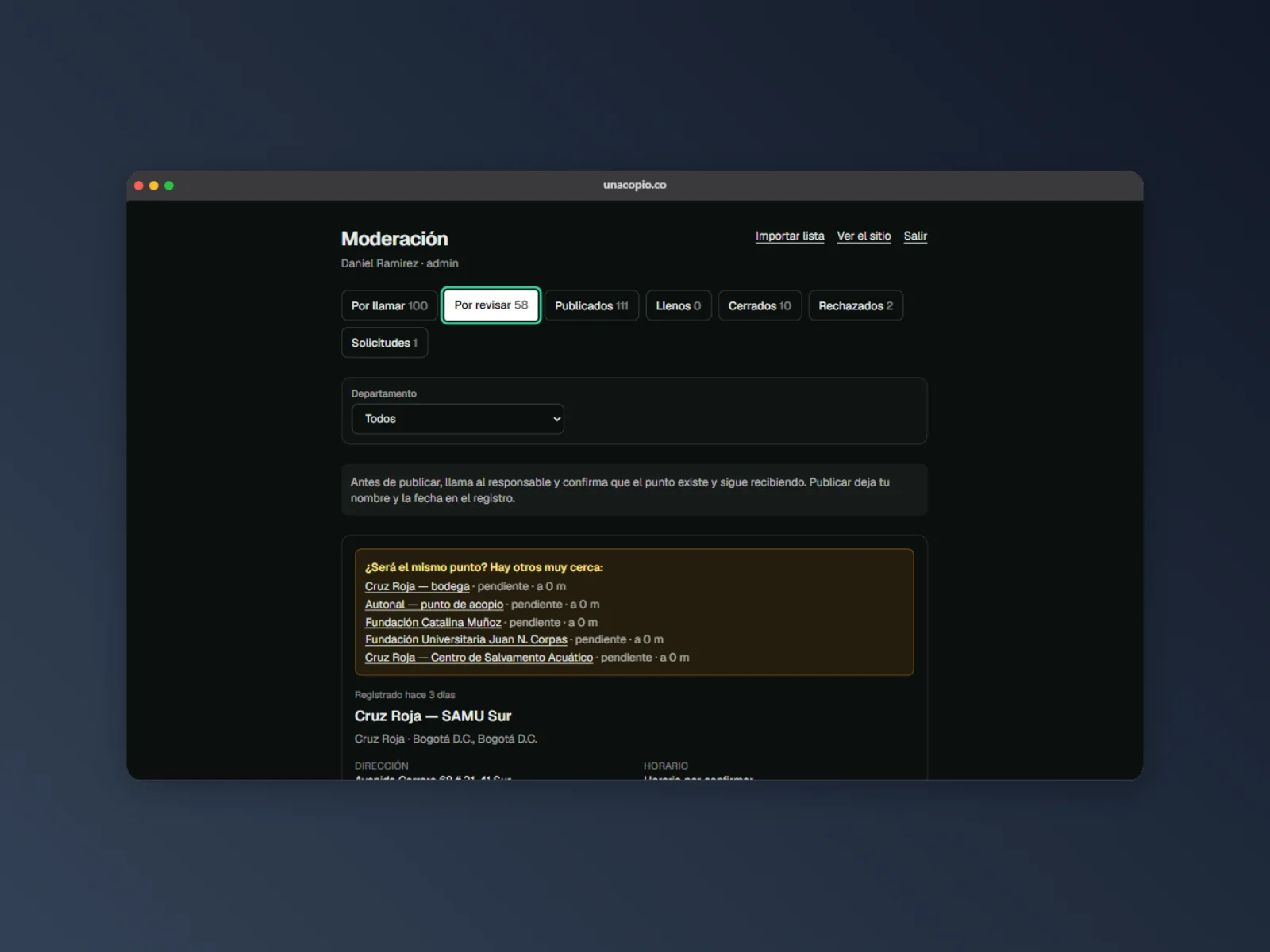
Anyone can submit a point, but none of them reaches the map until someone calls the person responsible and confirms it exists and is still receiving. Publishing stamps the verifier's name and the date onto the record.
An out-of-date point is worse than no point: it sends someone across the city to a closed door. That cost justifies the manual bottleneck, which is why the moderation panel is organised around the call — to call, to review, published, full, closed — rather than around the submission form.
Saying what not to bring
Each point lists what it urgently needs and what it is asking people not to bring. Emergencies attract unsorted clothing and food nobody can store; filtering that before it leaves the house saves the work of whoever is receiving.
Catching duplicates by proximity
The same point gets submitted again and again from different sources. While reviewing, the panel surfaces nearby entries so a moderator can merge them instead of publishing five versions of the same place.
Outcome
It went live with 28 verified points in Medellín and grew past a hundred published, spreading beyond Antioquia as submissions arrived from other regions.
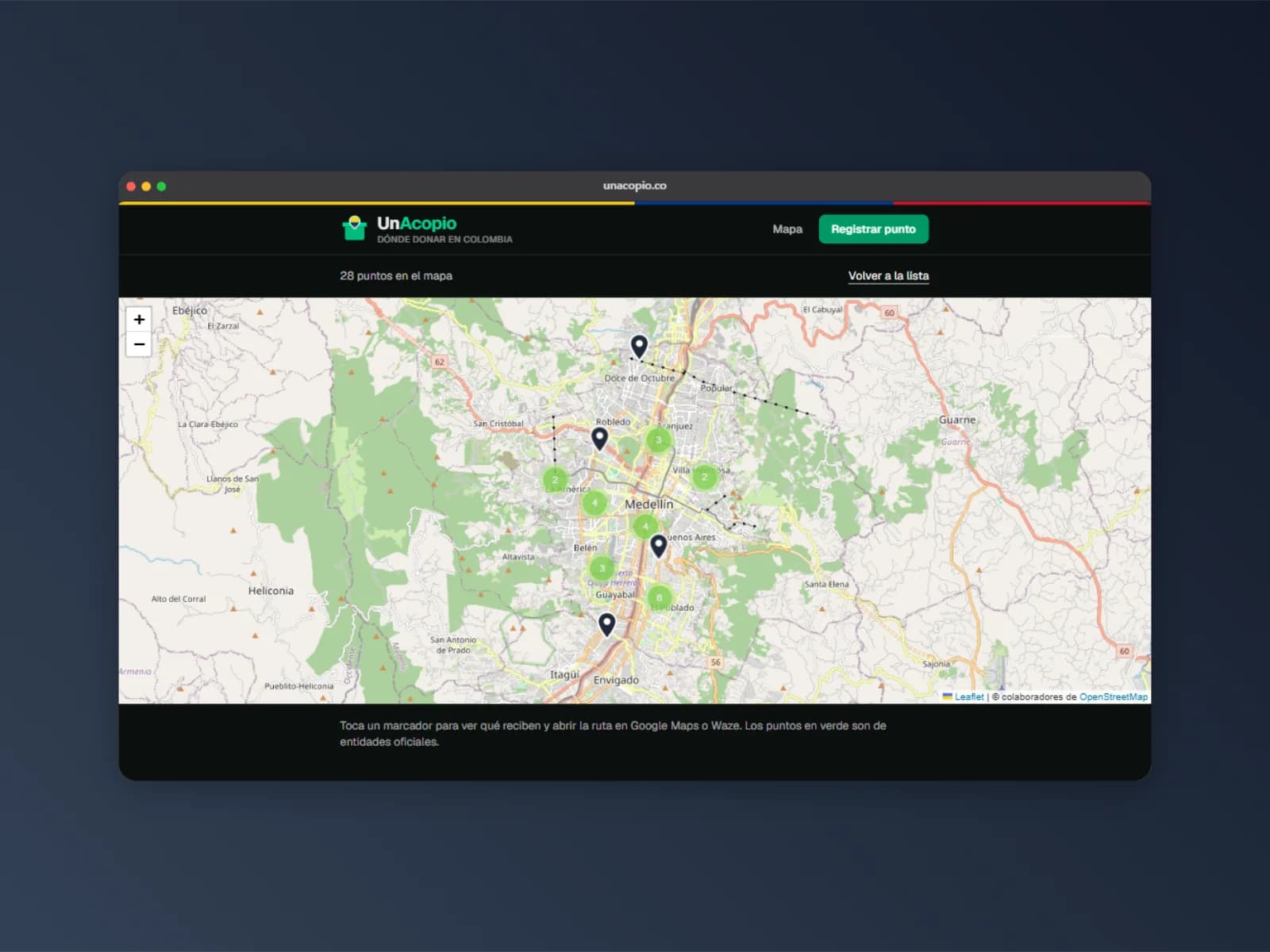
The map clusters points by area, marks which ones belong to official organisations, and opens the route straight into Google Maps or Waze — because the last useful step is not seeing the point, it is getting there.